The distillery is getting its ledger
Much of the recent work has happened between the visible parts: supplies, production, sales and expansion are more closely connected. The Distiller’s Path is now getting its green ledger on top of that foundation.
Placing a machine is the visible part. What interests me is turning it into a business: ingredients need to arrive, paid batches need to remain clearly in progress, and selling should be a deliberate decision. I have spent much of the last few days working on those connections.
From the first order to a business of your own
The functional journey now runs from the first employee through the first batch and sale to the master house and continued operation. Staff, training, machine care, research and room purchases are connected to that journey. Customers, casks, house recipes, blending and competitions add further choices.
I have also worked through smaller obstacles: early customer offers, partial sales, ingredient purchasing and the move from planning a batch to seeing it run. Placing objects should leave the distillery in view. These rarely call for a large new system, but they matter in ordinary play.
Green leather, paper and an open centre
I chose a green ledger for the interface. Its pages should feel calm, make important actions clearer and still belong in a working distillery. Light green, paper surfaces and subtle depth give the controls a shared character.
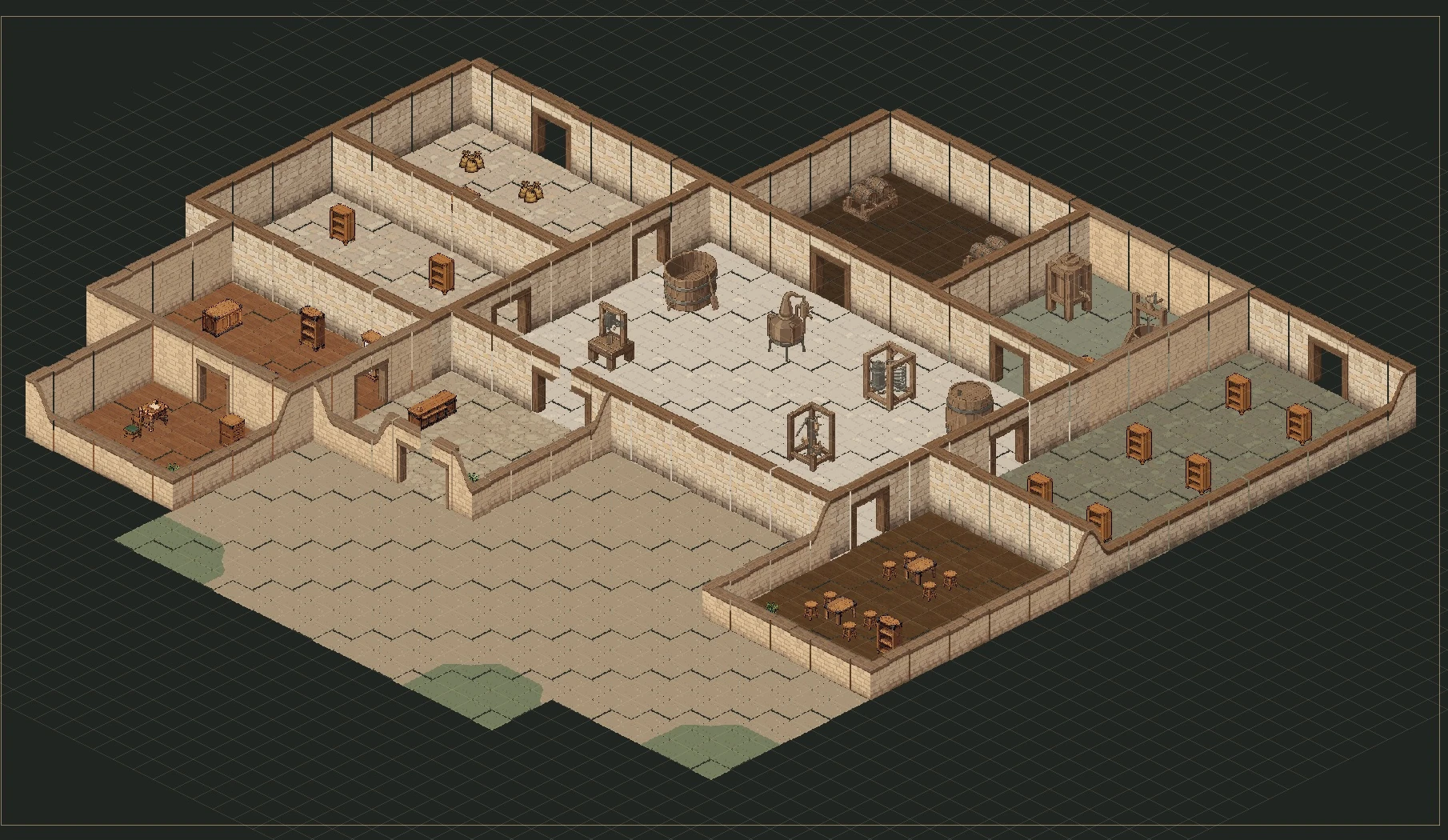
The start and pause menus, settings, new HUD arrangement and new-batch page are integrated in this design round. Pause, settings and date sit at the top left; furnishing and storage stay at the bottom left, with the book on the right. The centre stays open for the distillery.
The next pages
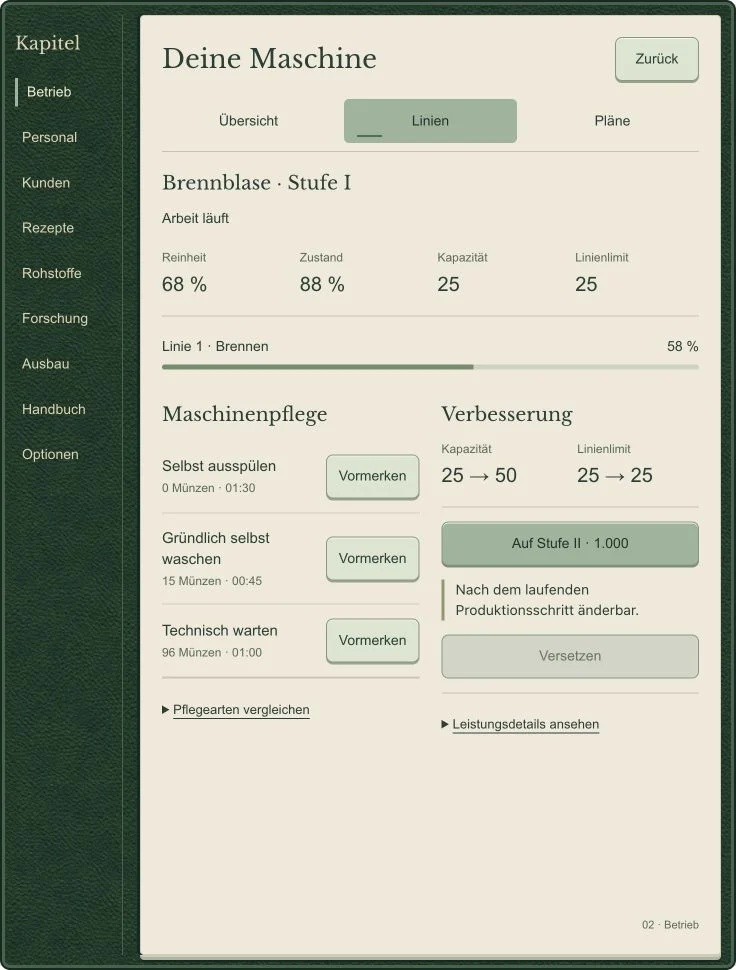
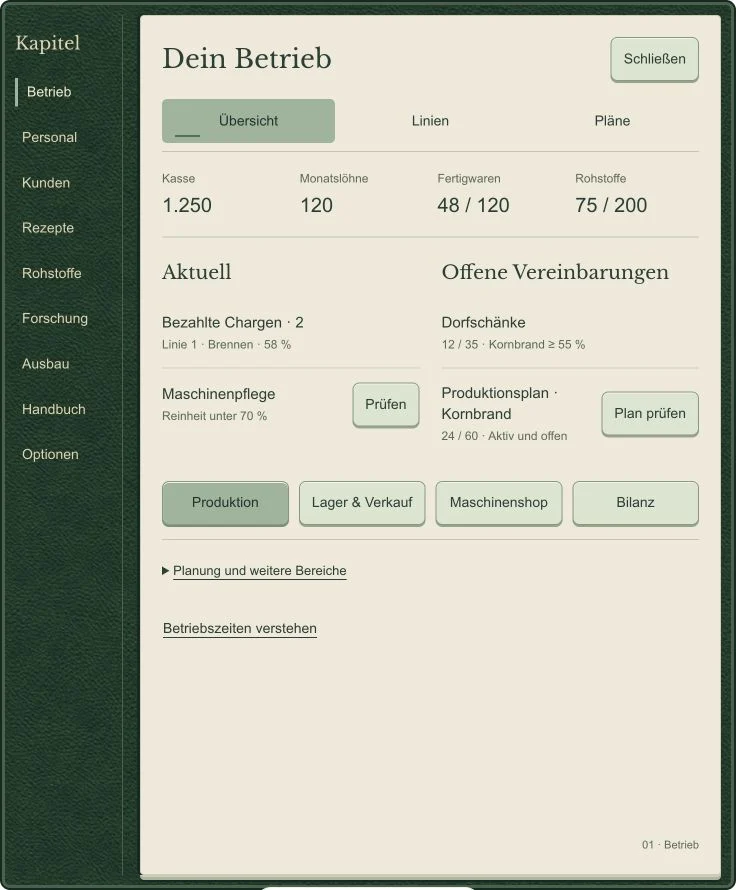
For the business overview, production lines, machine care and production planning, I am currently comparing two arrangements. The book images shown here are interface drafts from 31 October using example data. They show this layout work, rather than finished in-game screens.
For machine care, I want to make it quicker to see what is running, what cleaning costs and whether an upgrade will actually remove the line’s bottleneck. Plans need to make paid work, budgets and material reservations understandable.
I am working through the interface in manageable groups. The detailed tutorial and character animations follow afterwards. The business and its rooms should keep their own character as that work continues.