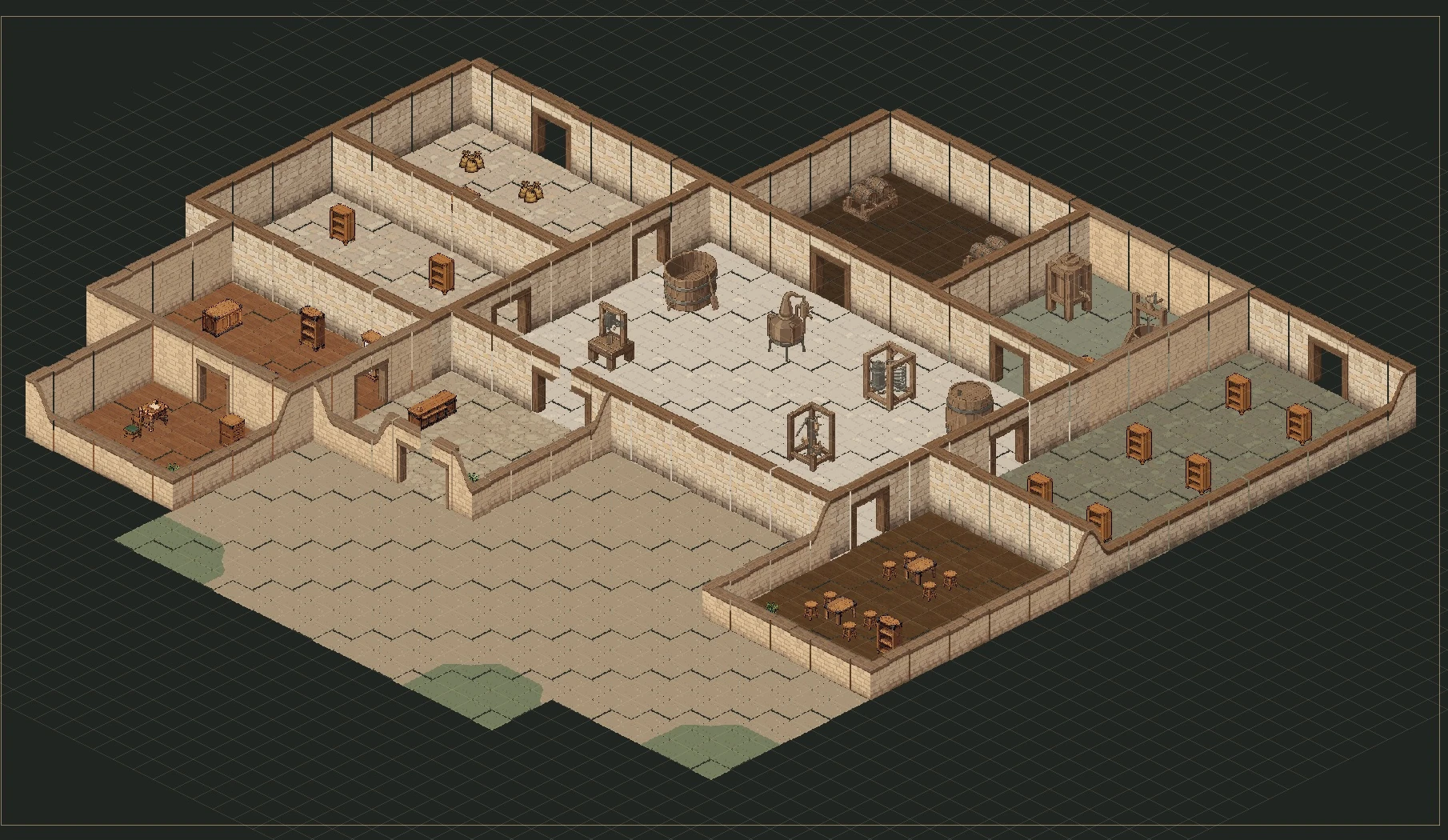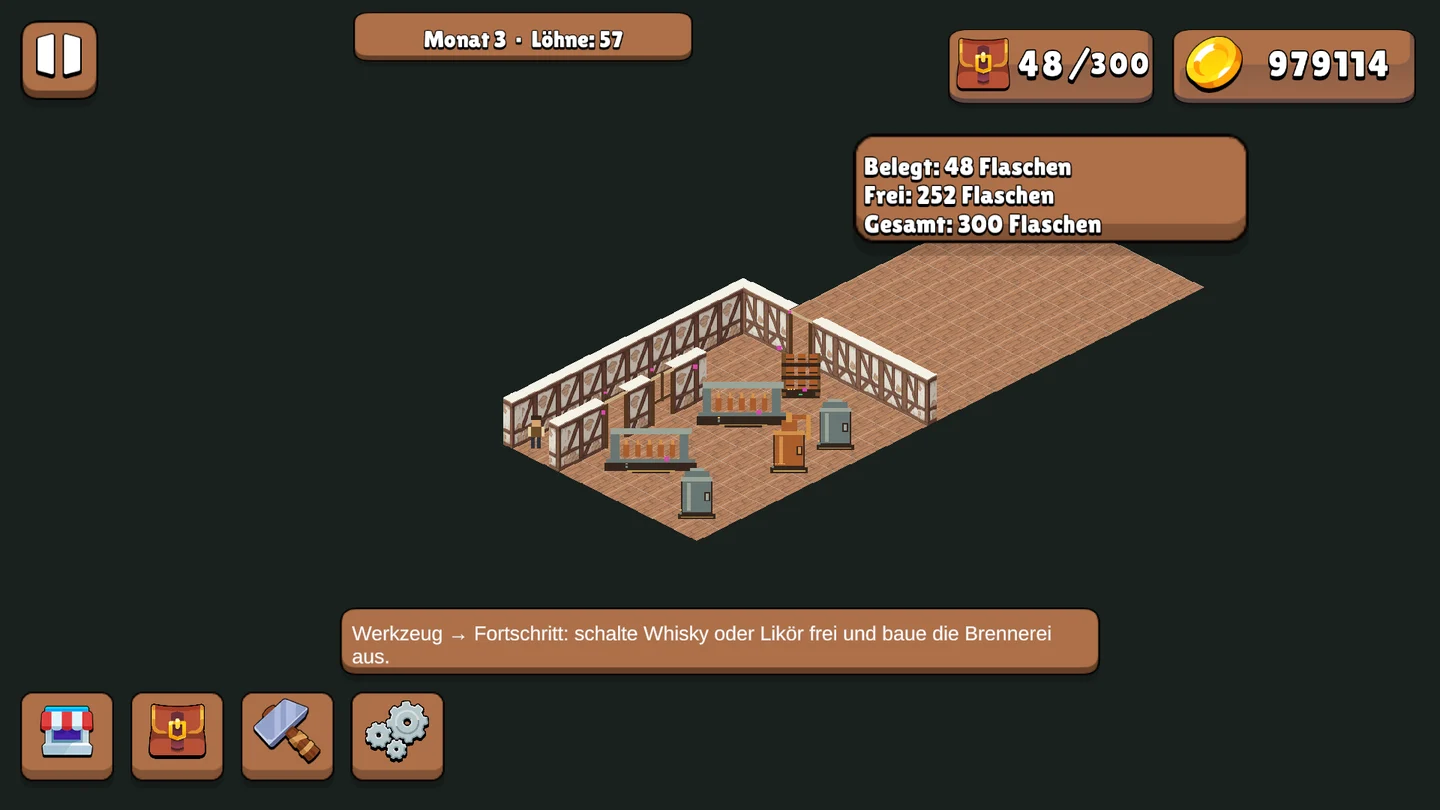
The distillery grows, object by object
Individual objects are the focus of The Distiller’s Path at the moment. Vats, barrels, machinery and pipes are taking shape. I’m bringing them into the game bit by bit and working on the details that help all those separate pieces feel like one distillery.
The last workshop report looked at the distillery as a whole: its rooms, furnishings and the way its different areas fit together. Right now, I’m looking more closely at the things that fill those rooms. I’m making the objects, bringing them into the game one by one and continuing to refine them there.
This stage involves lots of small steps. A vessel gets a clearer rim, a support gains more depth, a barrel gets a better shape. Sometimes it takes placing an object next to another one to see that its scale still needs work or that a detail draws too much attention. Those adjustments are a large part of what I’m doing at the moment.
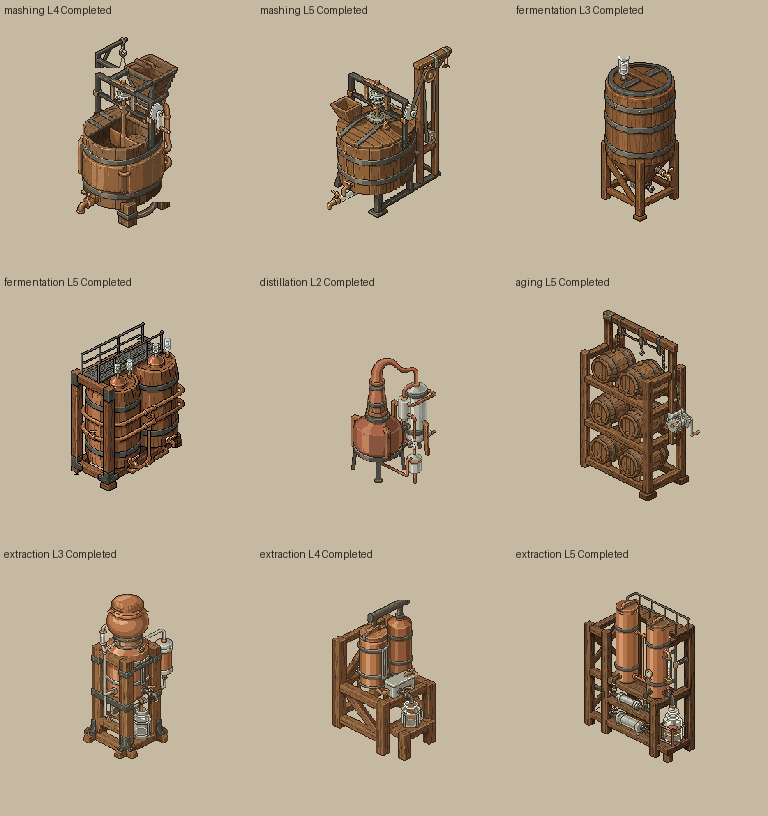
The sheets in this post are from 25 October. They show individual objects and their variants as working overviews. Some pieces are already in the game; others are still being worked on. These images record the visual work in progress rather than a finished gameplay sequence.
From a vat to a larger installation
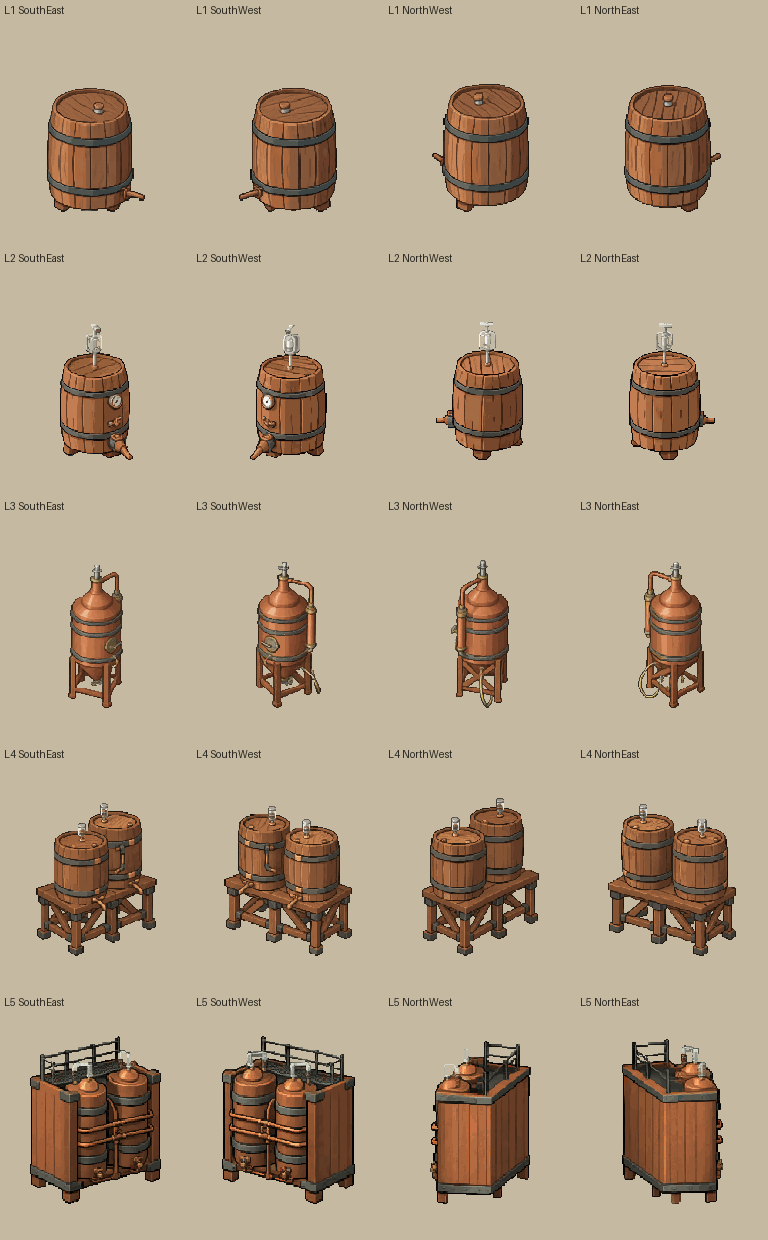
I want the production equipment to show how the distillery develops. A simple wooden vat has a different silhouette from a larger installation with a hopper, a drive and extra fittings. Seeing the proposed stages side by side helps me judge those differences.
At the same time, I want to keep the craft atmosphere. Wood, copper and dark metal run through the designs. Larger installations can look more elaborate while still belonging to the same distillery. I’m working on the individual details and on how much of that detail will remain readable in the game view.
An object needs a back, too
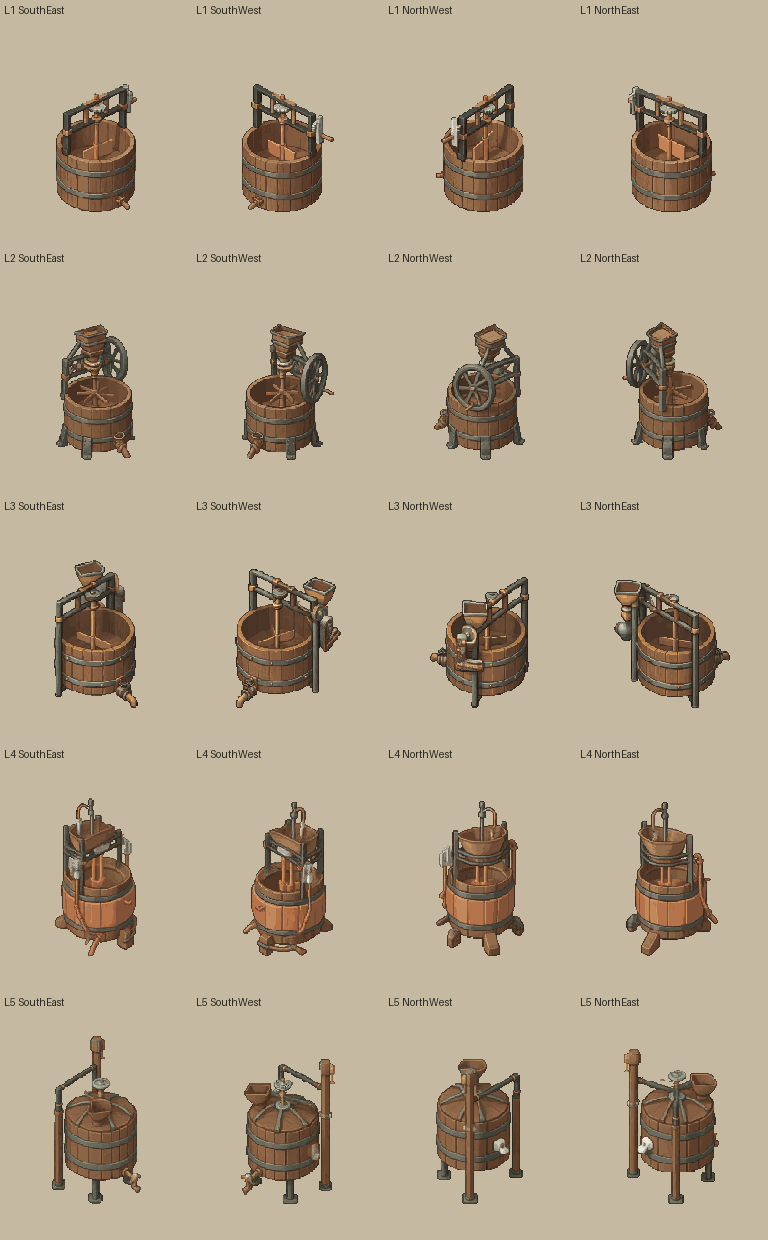
In an isometric view, a good front view is only part of the work. When I turn an object, its vessel, frame, connections and attachments need to fit together. Asymmetric equipment makes it particularly easy to spot a rear view that still needs attention.
The sheets showing all four directions help with that. As I bring the objects into the game, I check and refine their scale, orientation and contact with the floor. They need to sit convincingly in a room and remain readable beside their neighbours. The surrounding scene is where those decisions can really be judged.
More character for the barrel store
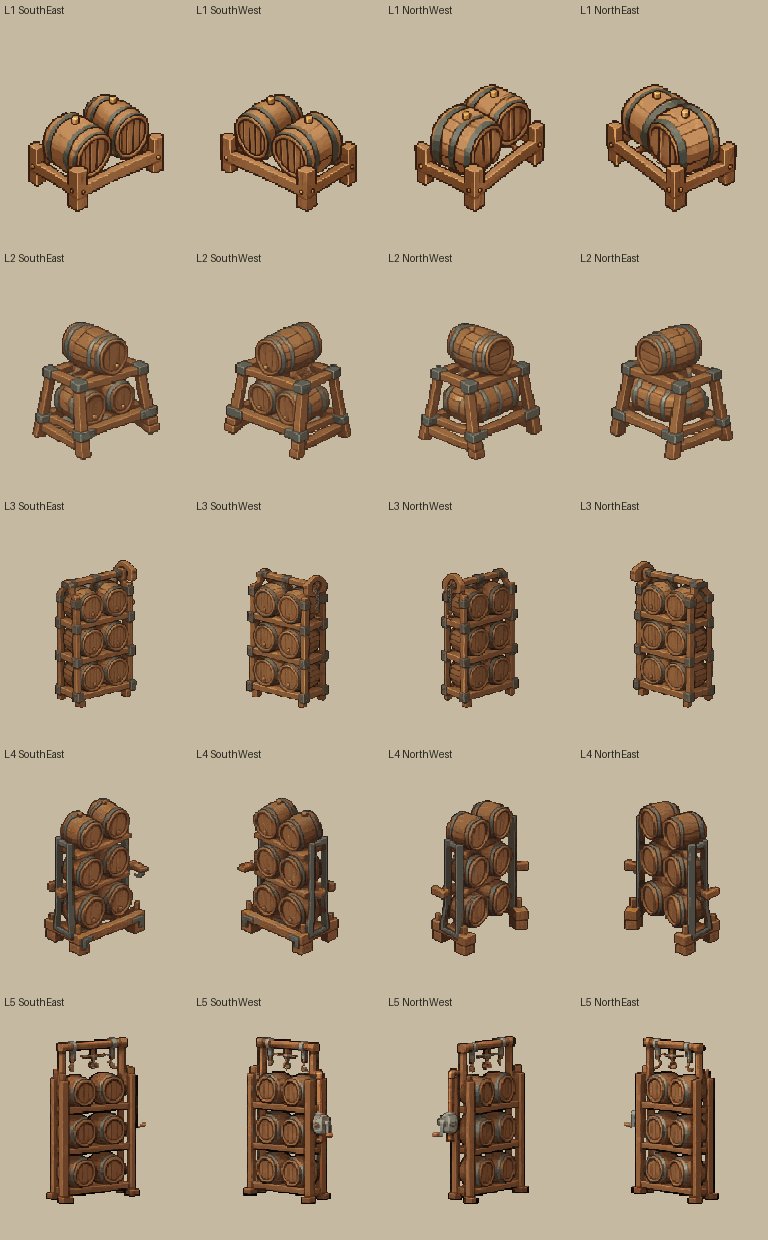
The barrels and their racks are getting more attention as well. There is a lot of design work between a small stand holding two barrels and a tall rack: proportions, wooden frames, metal bands and the arrangement of the barrels all change the impression.
I like the way the artwork can express that growth. Storage can become denser and more elaborate while keeping the familiar materials. I’m still adjusting the objects to one another and refining their details. The sheet shows the direction of that work.
The connections matter as well
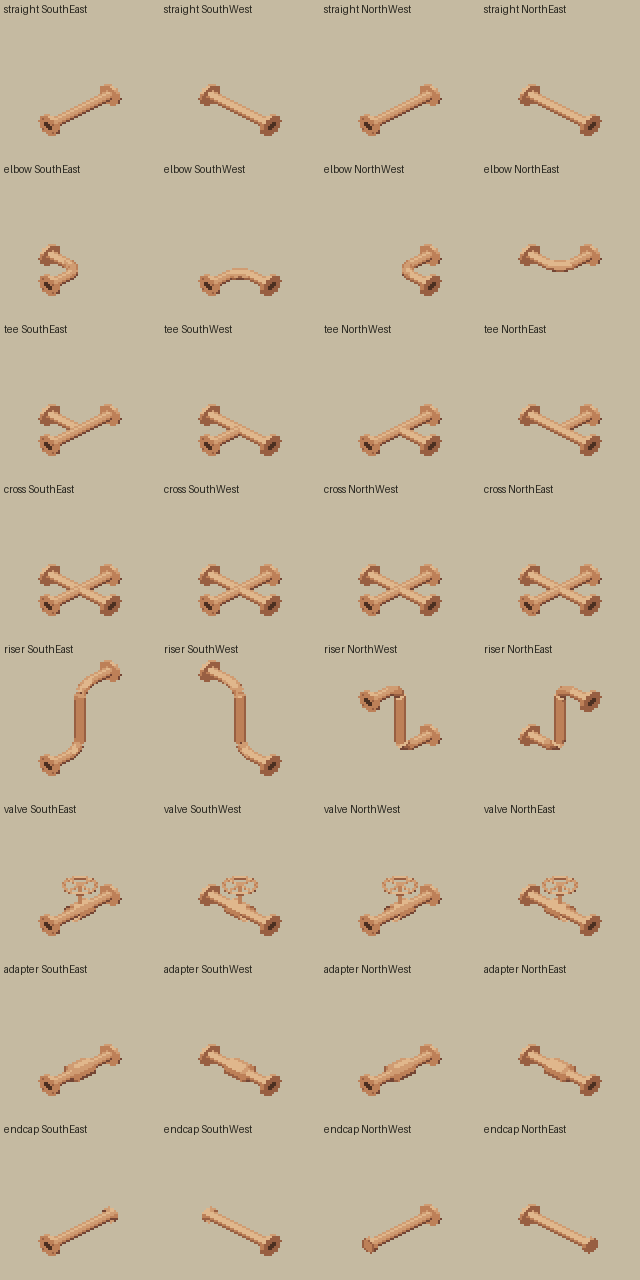
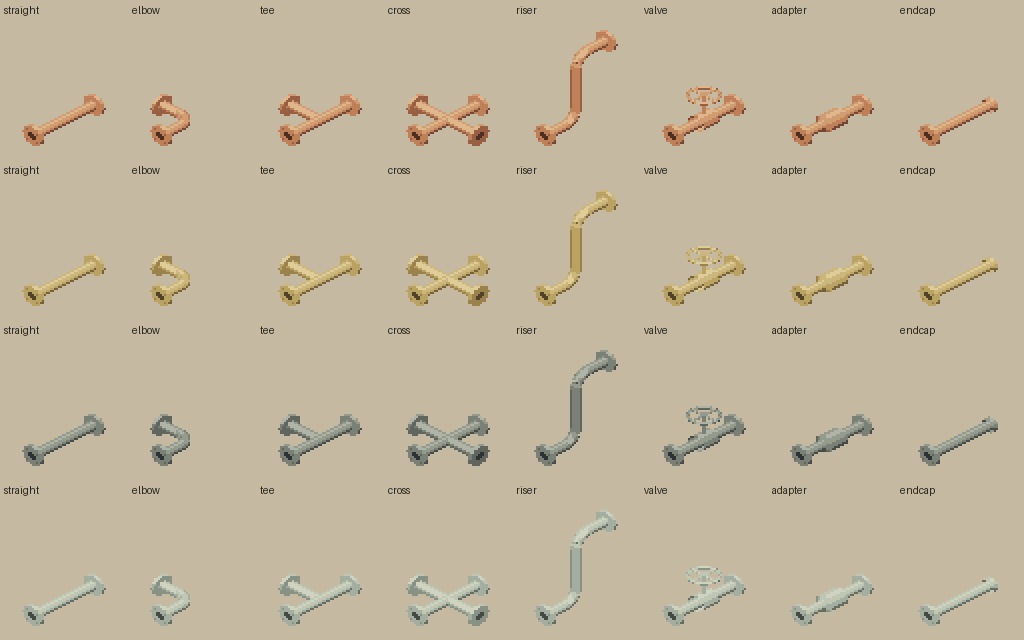
Alongside the larger objects, I’m making the smaller components: straight pipes, elbows, branches, valves and adapters. They draw less attention than a still, but they also help the equipment feel as though it belongs together.
For these pieces, the directions and connections need to work alongside the material appearance. The colour variants on the second sheet show how different the same forms can feel in warm copper tones or cooler metal tones. That is another part of bringing the objects into a consistent visual language.
What I’m continuing next
The next step is to keep bringing the objects into the game and refining them. I want the existing pieces to work together: adjusting their scale, revisiting their views, matching materials and sharpening details where they help the image.
I’m enjoying this part of the work. The distillery is becoming more concrete, piece by piece. Each object I bring in and revise makes it easier to picture how this place should eventually feel. That is what I’m continuing to work on.